What to Know in 2026
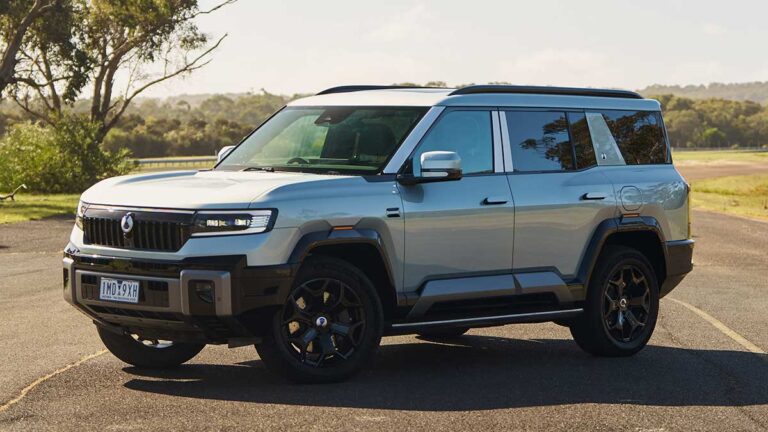
The “2026 BYD Shark” is the latest global version of BYD’s hybrid-pickup offering, a bold attempt to combine electrified efficiency, modern tech, and real-world utility. In this blog post, we’ll walk through what makes it stand out, what to watch out for, and what owning one feels like — especially relevant if you’re in a market like Pakistan or another region where hybrid pickups are rare.
What is the BYD Shark 6?
- The BYD Shark 6 is a plug-in hybrid pickup truck (PHEV) — not a pure EV, but built around a hybrid architecture that mixes electric motors with a small petrol engine.
- It belongs to the “dual-mode/off-road hybrid” platform that BYD calls DM-O (Dual-Mode-Offroad) — meant to give a balance between city efficiency, long-range highway touring, and some off-road capability.
- The “Shark” name reflects its styling — sharp, aggressive, and modern. It’s not a rugged old-school pickup only; the design mixes utility with contemporary car-like features.
Key Specs & Performance (2026 Version)
| Specification | Detail |
|---|---|
| Powertrain | 1.5 L turbocharged petrol engine + dual electric motors (one on each axle) → full AWD / e-AWD |
| Combined Output | ~321 kW (≈ 430–436 hp) and ~650 Nm torque |
| 0–100 km/h | ~5.7 seconds — sports-car pace for a pickup |
| Battery & Electric Mode | BYD’s LFP “Blade” battery (≈ 29.6 kWh) — ~100 km pure-electric range (NEDC) |
| Total Range (hybrid + petrol) | Up to ~800 km combined (battery + fuel tank) |
| Towing & Payload | Towing capacity ~ 2,500 kg (braked) — strong for its class. Payload and cargo-volume numbers are competitive. |
| Off-Road / Chassis / Suspension | Independent suspension (double wishbone rear), 230 mm ground clearance, moderate off-road angles — more comfortable ride than many traditional leaf-spring pickups. |
Interior & Features — A “Pickup Redefined”
What stands out about the Shark 6 is how far it brings modern “car comforts” into a pickup form:
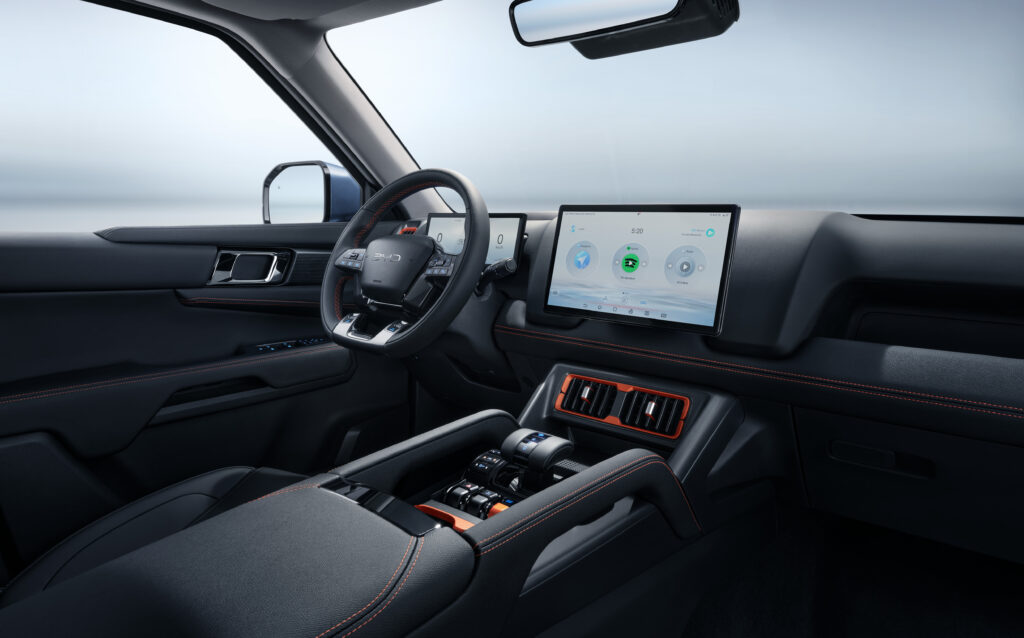
- Cabin finished with a black-and-orange theme, combining ruggedness with style. Seats are supportive; front seats often come with heating/ventilation (depending on trim).
- A huge touchscreen — 15.6″ media display — along with a 10.25″ digital instrument cluster. Infotainment supports Apple Car Play / Android Auto.
- Modern convenience and safety: key less entry (NFC-based), 360° camera, blind-spot detection, lane-keep assist, emergency braking, and other ADAS features.
- A V2L (vehicle-to-load) feature — useful for powering tools, camping gear, or external devices. This makes it attractive not only as a family/work pick-up but also for off-grid or adventure use.
What Works — Strengths
- Performance & Flexibility: 0–100 km/h in 5.7 s is super-impressive for a pickup; also AWD + towing capability + hybrid flexibility — good for city + long trips + off-road.
- Modern Tech & Comfort: With a plush cabin, big touchscreen, ADAS, and convenience features, it feels more like an SUV than a bare-bones ute.
- Hybrid Advantage in Mixed Infrastructure: For many countries (especially developing markets) where EV chargers are rare — the hybrid approach is pragmatic: you get electric-only capability when possible, and conventional fuel fallback when needed.
- Eco & Future-Ready Vibe: As automakers shift to greener mobility, owning a hybrid-pickup feels “future-forward” — lower emissions, better fuel economy (especially on city/short runs), and less dependence on fossil fuel for daily commuting.
Things to Watch — Potential Drawbacks & Criticisms
- Battery & Real-World Range vs. Claims: While 100 km EV range (NEDC) is claimed, real-world conditions (load, terrain, climate) — especially in hotter or rural regions — may yield less. Combined range depends heavily on charging habits for the battery.
- Ride & Handling Might Feel “Hybrid”: Because of the hybrid/EV underpinnings and independent suspension design, some traditional pickup buyers (used to leaf-spring plus heavy-duty ride quality) may find the ride firmer or less “truck-ish.”
- Cost & Maintenance (in Some Regions): Initial price is quite high compared to conventional pickups; maintenance for hybrid systems may also be more involved (though hybrid longevity and BYD’s global EV experience provide some reassurance).
- Charging Infrastructure / Fuel Dependence: In regions without reliable electricity or plug-in infrastructure (or where electricity costs are high), hybrid ownership benefits may be less distinct; petrol fallback matters a lot.
Who Is the Shark 6 For?
The BYD Shark 6 works best for:
- Urban + Mixed-use Drivers — people who drive within cities (commuting, errands) but occasionally need the towing/utility of a pickup.
- Families and Adventurers — those who want SUV-like comfort but also cargo space for trips, camping, or hauling.
- Regions with Partial EV Infrastructure — where pure EVs are impractical, but hybrid vehicles can give the best of both worlds.
- Buyers Looking Ahead — people who value modern safety, convenience, and lower emissions, and are open to hybrid-powered trucks.
My Take: Is 2026 the Right Time for Shark 6?
Yes — 2026 feels like the right moment for a vehicle like Shark 6. As global demand gradually shifts toward cleaner mobility, hybrid pickups offer a realistic transitional path. The Shark 6 packs serious muscle, tech, and versatility; for many users, it could replace both a family SUV and a conventional pickup — offering a blend of efficiency, comfort, and utility.
If you live in a place like Pakistan (or regions with mixed infrastructure), the hybrid-pickup concept seems very smart: you get electric-mode for city use (and the associated savings/emissions), and petrol-backup for long hauls or heavier loads.
In short: the Shark 6 represents a thoughtful bridging of the old (pickup practicality) and the new (hybrid/EV tech), and 2026 may very well be the year when “smart pickups” start to go mainstream.
If you like — I can project how Shark 6 might perform in Pakistan specifically (cost of ownership, suitability, pros/cons) based on fuel/electricity prices there.